SPLM and Kenya's Ruling UDA Sign Historic MoU, Formalising Strategic Partnership and Regional Integration
July 20, 2026
The Sudan People’s Liberation Movement (SPLM) has signed a historic Memorandum of Understanding (MoU) with Kenya’s ruling United Democratic Alliance (UDA), establishing a five-year framework for institutional cooperation, knowledge exchange, and strengthened political relations between the two parties and their respective countries.
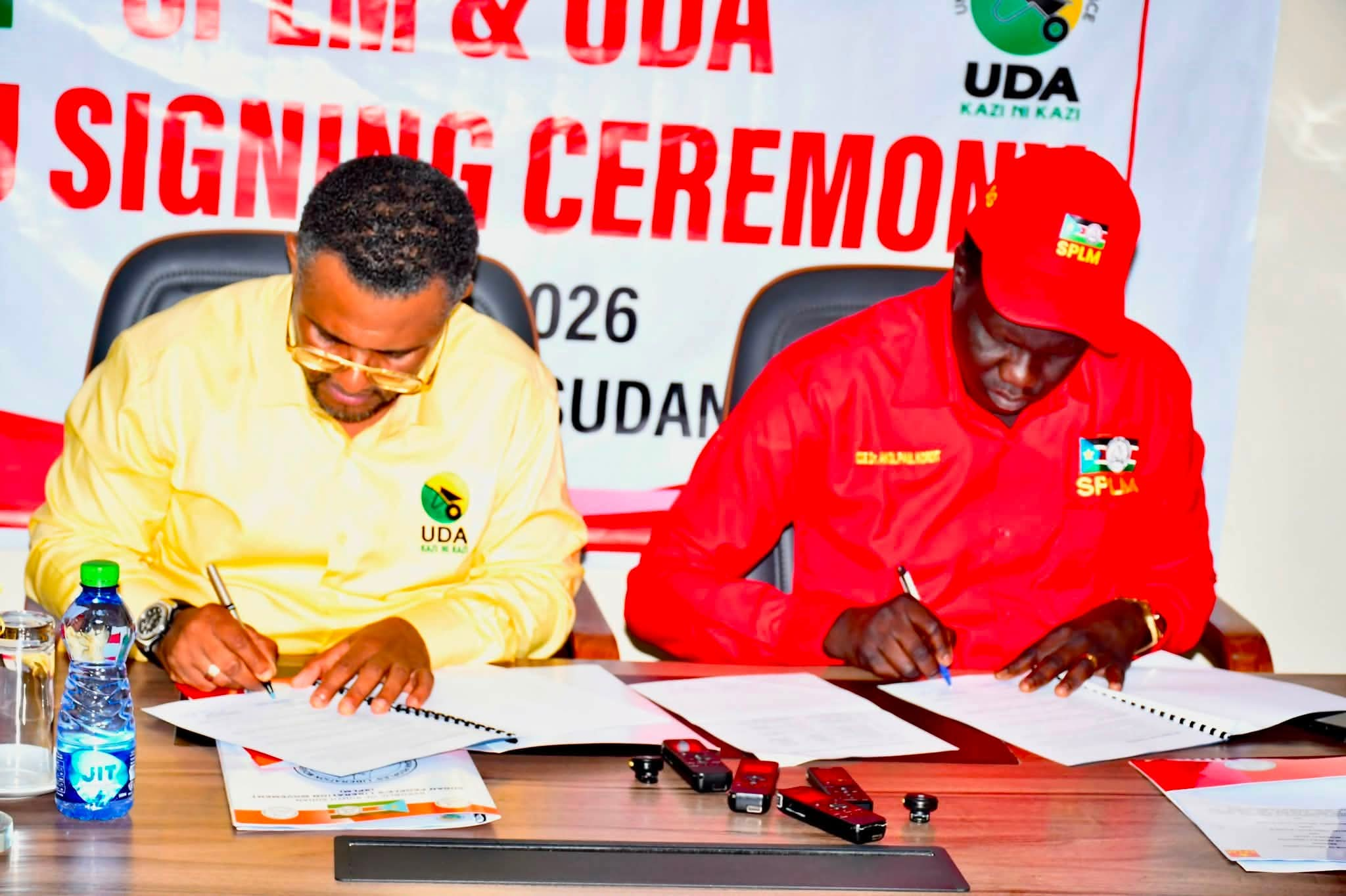
The agreement was signed by SPLM Secretary-General Cde. Dr. Akol Paul Kordit and UDA Secretary-General Senator Hassan Omar Hassan at the SPLM National Secretariat in Juba, in the presence of senior party leaders, diplomats, and members of the media.
The visiting UDA delegation from Nairobi was officially received at the Secretariat, where the two parties exchanged gifts in their respective party colours, symbolising the enduring political ties and longstanding relationship between South Sudan and Kenya.
The newly signed MoU focuses on practical areas of political and institutional development, including cadre training, capacity building, youth and women’s empowerment, and cooperation in research-based policymaking. It also provides for mutual support in election preparedness and enhanced coordination on regional issues within the East African Community (EAC) and the African Union (AU).
Speaking at the signing ceremony, SPLM Secretary-General Cde. Dr. Akol Paul Kordit described the agreement as an important step in strengthening the Movement’s institutional development and advancing its nation-building agenda. He said the agreement represented a strategic leap forward, adding that learning from successful regional experiences would reinforce peace, stability, and the Movement’s institutional strength as the country moves toward the upcoming elections.
UDA Secretary-General Senator Hassan Omar Hassan highlighted the shared history and close ties between the two countries and called for deeper regional integration and cooperation. He said the two countries were “one people across two states” and described the partnership as a formalisation of their shared destiny to dismantle borders, defeat tribalism, and advance Pan-African integration.